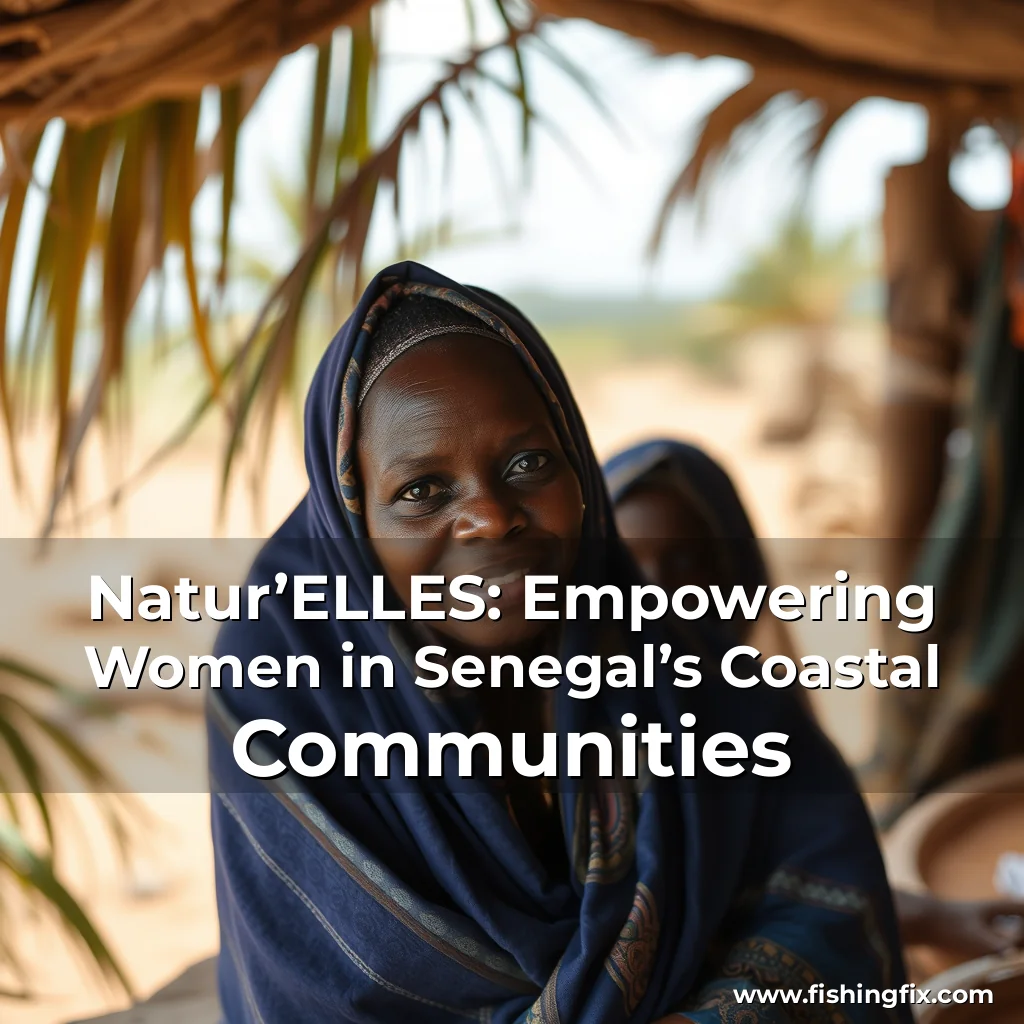
Natur’ELLES, a project dedicated to supporting local communities in addressing the challenges faced by the fishing sector in Senegal, recognizes the vital role that women play in the informal economic sector. By promoting sustainable fishing practices, Natur’ELLES aims to address the scarcity of fish observed in recent years, while empowering women to take their seats at the decision-making tables and play an active role in the management of natural resources, including fisheries.
Challenges Faced by the Fishing Sector in Senegal
- Overfishing
- Non-compliance with fishing regulations and standards affecting the reproduction of species
- Lack of access to relevant equipment
These challenges have led to a scarcity of fish observed in Senegal in recent years. The Natur’ELLES project supports local communities in addressing these issues by promoting sustainable fishing practices, such as not fishing during biological rest periods and adjusting net dimensions so younger fish can continue breeding.
Women’s Role in the Informal Economic Sector
In Senegal, women play a significant role in the informal economic sector. They are active throughout the fishing value chain: from collecting oysters and processing fish to selling fish products and preparing fish meals for their families. That is why empowering women also means empowering entire communities.
“Empowering women means empowering entire communities.”
Barriers to Women’s Representation in Decision-Making
However, women are still under-represented in high-level decision-making institutions around natural resources, including fish. This is due to several barriers, including lack of access to education and some restrictive and discriminatory practices.
| Barrier | Description |
|---|---|
| Lack of access to education | Women may not have the necessary education or skills to participate in decision-making processes. |
| Restrictive and discriminatory practices | These practices can limit women’s opportunities and prevent them from fully participating in decision-making processes. |
Natur’ELLES Supports Women in Senegal
Natur’ELLES provides women with the knowledge and skills they need to take their seats at the decision-making tables and play an active role in the management of natural resources, including fisheries. Access to data and knowledge puts them in a better position to raise awareness on best fishing practices, such as the necessity of observing biological rest periods and the strict respect of regulatory standards regarding net dimensions for the reproduction of species.
IISD Contribution to Natur’ELLES
The IISD will contribute to the Natur’ELLES project through its Sustainable Asset Valuation (SAVi) analysis tool. This tool provides a comprehensive analysis of environmental, social, economic and governance (ESG) related risks on infrastructure projects, capturing the full costs as well as the benefits of any intervention.
- System Dynamics-Based Approach
- Forecasting project’s impacts using system dynamics, including cause-effect and risk factors
- Delivering reputable infrastructure financing recommendations to governments and investors
The end goal of SAVi is to deliver reputable infrastructure financing recommendations to governments and investors so they can make informed decisions and “steer capital towards sustainable infrastructures.” Past work has shown that SAVi assessments make compelling arguments for nature-based infrastructure interventions, including the ESG benefits for women.
Natur’ELLES Initiatives
- Mangrove Platforms
- Global Ecosystems Monitoring app (GEM)
- “Classe d’alphabetisation” program
- Feminist Leadership program
Natur’ELLES supports women in Senegal through several initiatives. In partnership with IUCN, Natur’ELLES supports “mangrove platforms” – regular meetings, gathering all stakeholders to discuss issues related to the conservation of mangroves as well as challenges and solutions. These dialogue platforms offer an opportunity for women to equally influence decisions on the planning and the management of natural resources.
The Global Ecosystems Monitoring app (GEM) will be used to monitor and measure the health of natural ecosystems, such as in mangrove ecosystems. It will help collect environmental data, including information on fishery resources, to help the planning and management activities and minimize the negative impact of human activities. Furthermore, it will also offer educational resources to empower biodiversity and resource management champions and play an essential role in promoting sustainable fishing practices and behaviors.
The GEM app offers the possibilities for communities – women in particular – to participate in data collection activities and collaborate with public authorities to monitor progress themselves, take ownership of their natural resource management systems, and fully understand the evolution of mangrove-based ecosystems while adopting best practices.
Natur’ELLES is also implementing an educative program tailored to women who did not have a formal education titled “classe d’alphabetisation”. This program will reduce the education gap of women while building their capacities to read and write (necessary skills to produce and analyze data) and meet their full potential.