Offshore Staging
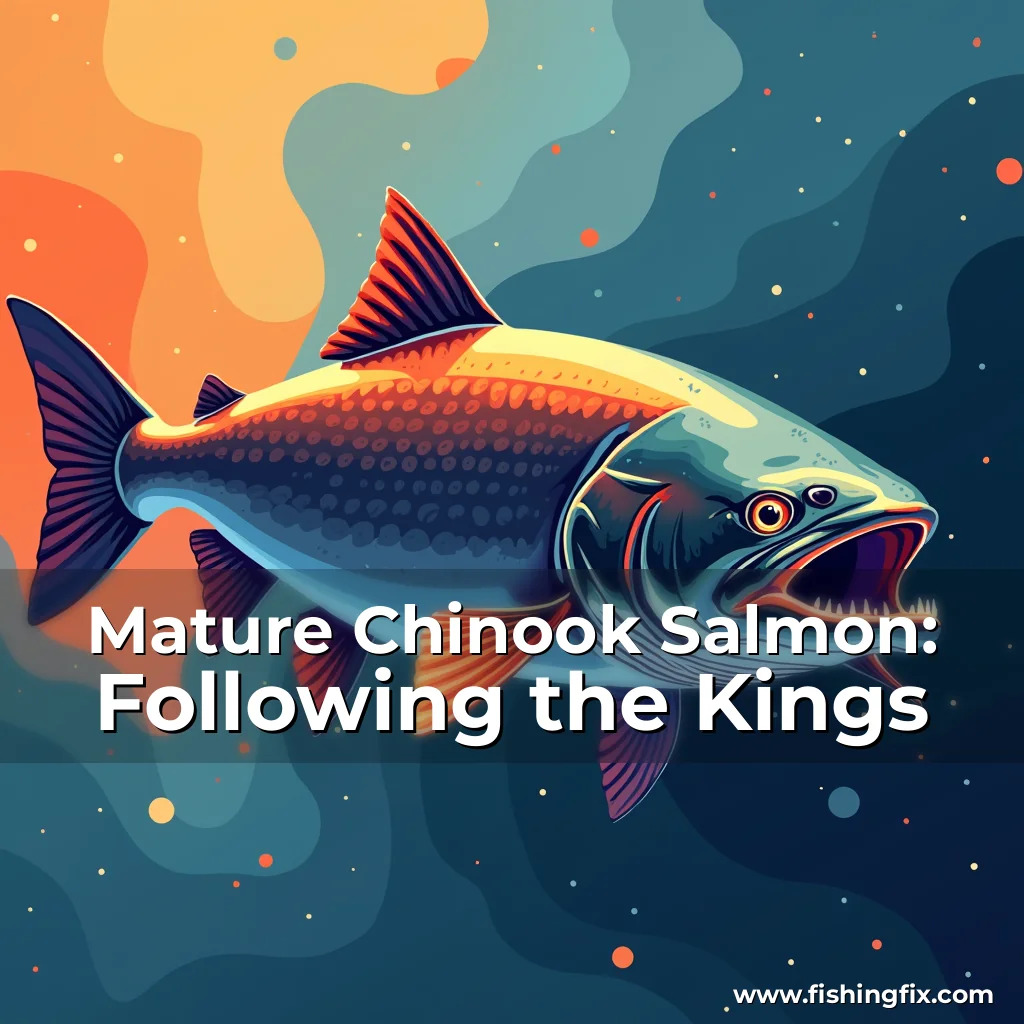
Mature chinook salmon, also known as king salmon, are known for their nomadic nature and ability to travel long distances in search of prey fish in the Great Lakes. This characteristic makes them challenging to catch, but also presents anglers with an opportunity to follow the kings and land them. One of the key stages in this process is the offshore staging phase, which typically occurs in early August. During this time, mature kings will frequent water depths of 60 to 100 feet, usually within a few kilometers of the rivers they will eventually enter. This stage is characterized by a random movement, as schools of alewife are still feeding on these fish. However, as the water temperature warms up, the intake of alewife becomes less, and the kings begin to adjust to the warmer temperatures. Anglers can take advantage of this stage by trolling parallel to the shoreline in 80 to 110 feet of water, and gradually moving to 40 to 60 feet if the fish are not present. A combination of lures such as bodybaits, J-Plugs, Kwikfish, and flasher/fly combinations in shades of chartreuse or white can be effective during this stage. It’s worth noting that the hour before sunrise and near sunset will usually be active periods for chinook, as they will move into shallow water, 40 to 60 feet, overnight but will move after sunrise to 90 to 100 feet and hug bottom. Anglers should avoid running over the fish near sunrise, instead starting shallow and trolling out.
Harbour and Pier Staging
The second stage of the chinook salmon’s life cycle is the harbour and pier staging phase, which typically occurs in late August and early September. During this time, fish will hold in 30 feet of water and cruise off the end of the piers, and with any increase in river flow, will enter the harbour. Anglers can take advantage of this stage by using a variety of techniques, including fishing from small boats and kayaks, and shore fishing from breakwalls and piers. Fishing out of kayaks and canoes is becoming increasingly popular, as it allows for a silent presentation and doesn’t bother shallow chinook. When fishing from kayaks or canoes, anglers should use a trolling speed of 2.3 to 2.5 mph (3.7 to 4 km/h), and prefer lures such as Rapala J-13s and Luhr Jensen J-Plugs. A zig-zag pattern can be used to maximize the area of presentation. Casting and drifting with roe can also be effective, as chinook are aggressive and will hit lures with a reflex-type bite. Anglers should use a fast, jerky retrieve with spoons and a slow steady retrieve with plugs.
The River Staging
The final stage of the chinook salmon’s life cycle is the river staging phase, which typically occurs within a couple of days of entering rivermouths. During this time, fish will start to move upstream if there is a current flow to facilitate movement. Big rains a couple of days apart will get salmon on the move. Anglers can take advantage of this stage by scouting their fishing areas and choosing to fish on weekdays or early morning at sunrise. The choice anglers face is whether to fish a large river with a bigger run of fish, but also potential crowds, or to fish smaller streams with fewer fish and anglers. Fly fishing can be an effective way to target chinook in the river, using nymphing methods such as indicator nymphing or euro nymphing. Egg flies, worm flies, Woolly Buggers, egg-sucking leeches, and nymph patterns in sizes six to 10 can be effective.
Best Bets for Anglers
Here are some of the best spots for anglers to target chinook salmon, in alphabetical order:
* Lake Ontario: Bowmanville Creek, Bronte Creek, Credit River, Duffins Creek, Ganaraska River, Niagara River, Oshawa Creek, Port Dalhousie, Wilmot Creek
* Lake Huron: Beaver River, Bighead River, Nottawasaga River, Sauble River, Saugeen River, St. Mary’s River, Sydenham River
* Lake Superior: Michipicoten River
* Rivers: Ganaraska River, Niagara River, Oshawa Creek, Port Dalhousie, Wilmot Creek
Note: The data on chinook salmon stocking and natural reproduction is not provided in this article, but it can be found on the Ontario Federation of Anglers and Hunters (OFAH) website.