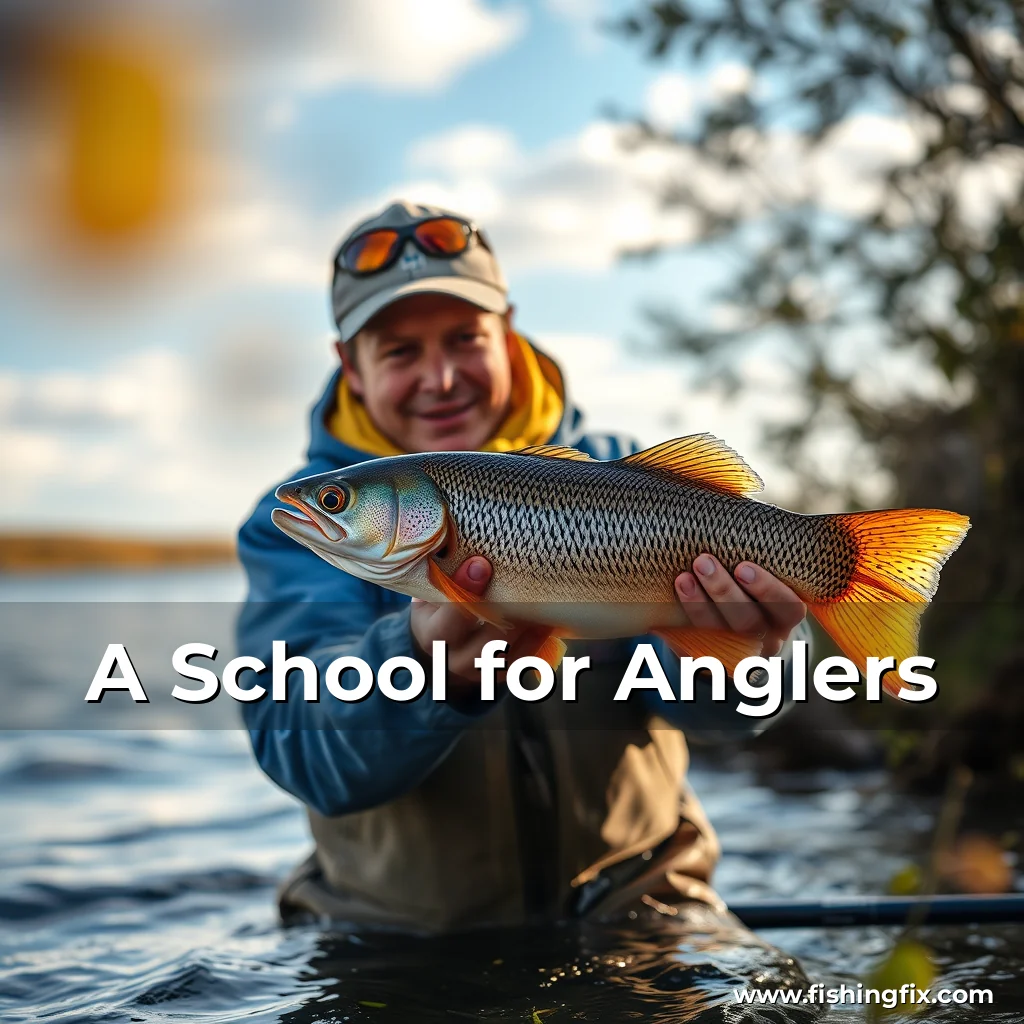
A school for anglers has taken shape at Hinckley-Finlayson High School in Minnesota. This is a dream come true for the students and their teacher, Dan Kreft. Kreft has been teaching Angling I and Angling II, and his enthusiasm is infectious.
Angling I covers a wide range of topics, including studying Minnesota fish species, fishing techniques, conservation, and invasive species.
The course is designed to cater to both experienced anglers and beginners, allowing them to learn from each other.
Guest speakers, including DNR Fisheries biologists and Minnesota angling guide Tony Roach, bring expertise to the class.
Field trips have taken place on local waters, during open-water and ice seasons.
The class has visited the local DNR fish-rearing facility and a fishing launch on Lake Mille Lacs.
The course catalog lists Angling I as a physical education elective, but it also meets science standards. Students learn about the different species of fish, invasive species, the thermocline, and migrations of fish throughout the year.
The class has been popular, with Kreft offering a second semester.
Angling II focuses on building a custom rod, tying jigs, and using various terminal equipment.
Students are excited to learn and participate in class, often waiting to get started as soon as the bell rings.
Senior Tanner Risley, an experienced angler, took Angling I and taught his teacher, Kreft, some things about fishing for catfish and sturgeon. Despite his experience, Risley found the class to be a valuable learning experience, helping him develop new skills and knowledge.
“Angling I has been a good learning experience for me, as I may have thought I knew everything about fishing, but there’s definitely more to it than that. The class has helped me learn about different species, fishing techniques, and conservation, which has made my fishing trips more enjoyable and successful,” said Risley.
The success of Angling I and Angling II can be attributed to the support of the community. A No Child Left Inside grant from the DNR helped establish the class, and local businesses have donated equipment and resources.
Community Support for Angling I and II
Otter
Buy-one, get-two-free deal on ice shelters
Lions Club
Generous donation
Zinpro
Donated several hundred dollars for the class to get on the launch at Mille Lacs
Kreft emphasizes the importance of community involvement, citing the need for ongoing funding and volunteers to support the program. “Money for trips is an ongoing need, and then volunteers,” said Kreft. “We’re always looking for volunteers to kinda come and help supervise kids when we get out on those fishing trips, and also to pass on their knowledge and expertise they might have.”
The school for anglers at Hinckley-Finlayson High School is a shining example of how education and community can come together to provide students with a unique and enriching learning experience. “It’s been really cool to see the support that we’re getting from big companies like Otter, all the way down to local residents that just want to help out and get involved,” said Kreft, highlighting the importance of community involvement in the success of the program. Key Takeaways
* Angling I covers a wide range of topics, including studying Minnesota fish species, fishing techniques, conservation, and invasive species. * The class is designed to cater to both experienced anglers and beginners, allowing them to learn from each other. * Guest speakers, including DNR Fisheries biologists and Minnesota angling guide Tony Roach, bring expertise to the class. * Field trips have taken place on local waters, during open-water and ice seasons. * The class has visited the local DNR fish-rearing facility and a fishing launch on Lake Mille Lacs. * Angling II focuses on building a custom rod, tying jigs, and using various terminal equipment. * Students are excited to learn and participate in class, often waiting to get started as soon as the bell rings. * Community support, including donations and volunteers, has played a crucial role in the success of the program.
Definitions
*
Angling I
: A semester-long class that covers a wide range of topics related to angling, including Minnesota fish species, fishing techniques, conservation, and invasive species. *
Angling II
: A second semester-long class that focuses on building a custom rod, tying jigs, and using various terminal equipment. *
No Child Left Inside grant
: A grant from the DNR that helped establish Angling I. *
DNR Fisheries biologists
: Experts in fish biology and conservation. *
Minnesota angling guide
: A guide who provides expert knowledge and instruction on angling techniques and local fishing spots.
Key Terms
*
Thermocline
: A layer of water in a lake where the temperature changes rapidly with depth. *
Invasive species
: Non-native species that can harm the environment and ecosystem. *
Terminal equipment
: Equipment such as lures, hooks, and line used for fishing. *
Rod-building supplies
: Materials and tools used to build custom fishing rods.
Key Concepts
*
The importance of community involvement in education
: The role of local businesses, organizations, and residents in supporting educational programs. *
The value of hands-on learning
: The benefits of experiential learning, such as field trips and hands-on activities, in acquiring knowledge and skills. *
The need for ongoing funding and support
: The importance of securing resources and volunteers to sustain educational programs over time.