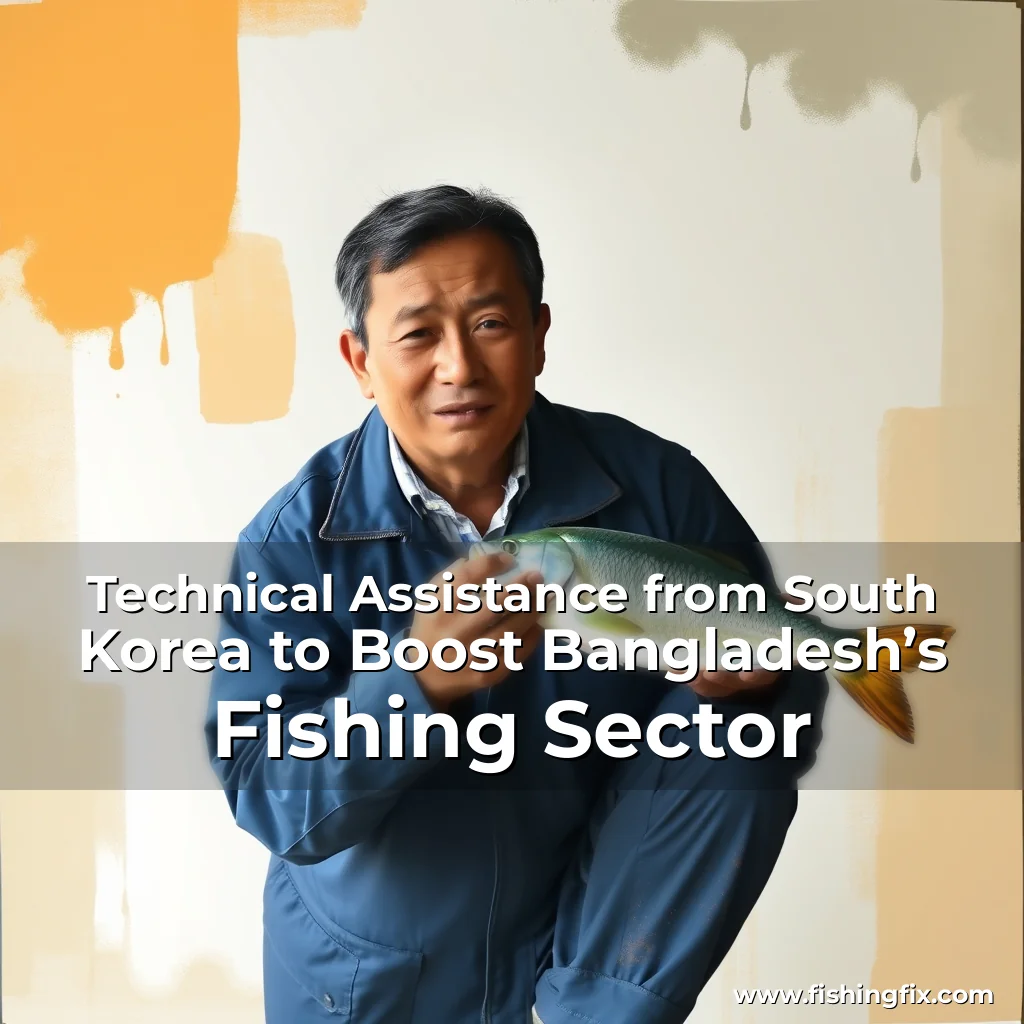
The Government of South Korea is set to provide technical assistance to Bangladesh to boost the country’s fishing sector, a move that is expected to enhance bilateral cooperation in the field of fisheries. According to a press release, the Adviser to the Ministry of Fisheries and Livestock, Farida Akhter, called on Vice-Minister for Fisheries of the Republic of Korea, Choi Yong-seok, to request technical assistance from South Korea. The meeting was held in Busan, South Korea, and was attended by various officials from Bangladesh, including the Ambassador to South Korea, Toufiq Islam Shatil, and Chairperson of the Bangladesh Fisheries Development Corporation, Suraiya Akhter Jahan.
Opportunities for Deep-Sea Fishing and Marine Fisheries
Farida Akhter emphasized the opportunities that Bangladesh has in deep-sea fishing and marine fisheries, citing the potential for tuna fishing, marine resources assessment, and technological innovation in mariculture. She stated, “The deep-sea fishing and marine fisheries in Bangladesh have immense opportunities, and the country can greatly benefit from advanced technologies in tuna fishing, marine resources assessment, and related fields.”
She also highlighted the need for improving surveillance against illegal fishing in deep-sea waters, enhancing capacity for tuna fishing, and assessing marine resource stocks. She pointed out that Bangladesh faces challenges such as IUU fishing, overfishing, and pollution of the oceans, which can impact the country’s fishing sector.
Agreement on Technical Assistance
The two countries agreed to sign a Memorandum of Understanding (MoU) on technical research collaboration to address these challenges. Vice-Minister Choi Yong-seok expressed his agreement with the proposal and assured that the South Korean government would seek ways to expand bilateral cooperation in fisheries. He said, “South Korea has already implemented modern tracking systems for tuna fishing in deep-sea waters and combating illegal fishing. We are eager to support Bangladesh in these areas and are keen to sign a MoU on technical research collaboration.”
Challenges and Opportunities
Bangladesh and South Korea face common challenges in the field of fisheries, including climate change, ocean pollution, IUU fishing, overfishing, and the use of illegal fishing gear. However, both countries also have opportunities for cooperation, particularly in the areas of marine research and development. Farida Akhter expressed optimism about the collaboration between the two countries, stating, “We believe that with the help of South Korea, we can address these challenges and make significant progress in the development of our fisheries sector.”
Future Cooperation
The two countries agreed to continue their cooperation in the field of fisheries, with a focus on strengthening marine fisheries research capabilities, offering study opportunities for Bangladeshi researchers, and developing value-added products and food processing plants to improve fish exports. The South Korean government also expressed its eagerness to support Bangladesh in addressing the challenges facing the country’s fishing sector, including improving surveillance against illegal fishing in deep-sea waters and enhancing capacity for tuna fishing.
Key Highlights of the Meeting
- Signing of a Memorandum of Understanding (MoU) on technical research collaboration to address challenges in the fishing sector
- South Korean support in improving surveillance against illegal fishing in deep-sea waters
- Assistance in enhancing capacity for tuna fishing and assessing marine resource stocks
- Strengthening marine fisheries research capabilities and offering study opportunities for Bangladeshi researchers
- Development of value-added products and food processing plants to improve fish exports
Relevant Institutions
| Relevant Institution | Description |
| Korea Maritime Institute (KMI) | Leading institution for research and development in the field of fisheries in South Korea |
| Korean Fisheries Resources Agency (FIRA) | Agency responsible for managing and conserving fisheries resources in South Korea |
| Pukyong National University | University with a strong focus on fisheries and marine science research in South Korea |
| Korea Fisheries Association | Representative body for the Korean fishing industry |
Next Steps
Farida Akhter is currently on a five-day official visit to South Korea with a high-level delegation from the Ministry of Fisheries and Livestock. During her visit, the delegation is exploring ways to enhance bilateral cooperation in the fisheries sector. The next steps for the two countries will be to implement the agreed-upon MoU and continue their cooperation in the field of fisheries. The Bangladesh government is also expected to take concrete actions to address the challenges facing the country’s fishing sector.
Farida Akhter’s Message
“Bangladesh has the potential to become a leading fishing nation in the region, and with the support of South Korea, we can make significant progress in the development of our fisheries sector. I am optimistic about the future of our bilateral relations and look forward to working with the South Korean government to address the challenges facing our fishing sector.” —Farida Akhter
Challenges Ahead
Despite the agreement on technical assistance, Bangladesh and South Korea still face common challenges in the field of fisheries, including climate change, ocean pollution, IUU fishing, overfishing, and the use of illegal fishing gear. However, with the help of South Korea, the two countries can address these challenges and make significant progress in the development of their fisheries sectors.
Conclusion
The technical assistance from South Korea is a significant step towards enhancing bilateral cooperation in the field of fisheries between Bangladesh and South Korea. The two countries have agreed to sign a Memorandum of Understanding (MoU) on technical research collaboration to address the challenges facing their fishing sectors. With the support of South Korea, Bangladesh can make significant progress in the development of its fisheries sector and become a leading fishing nation in the region.