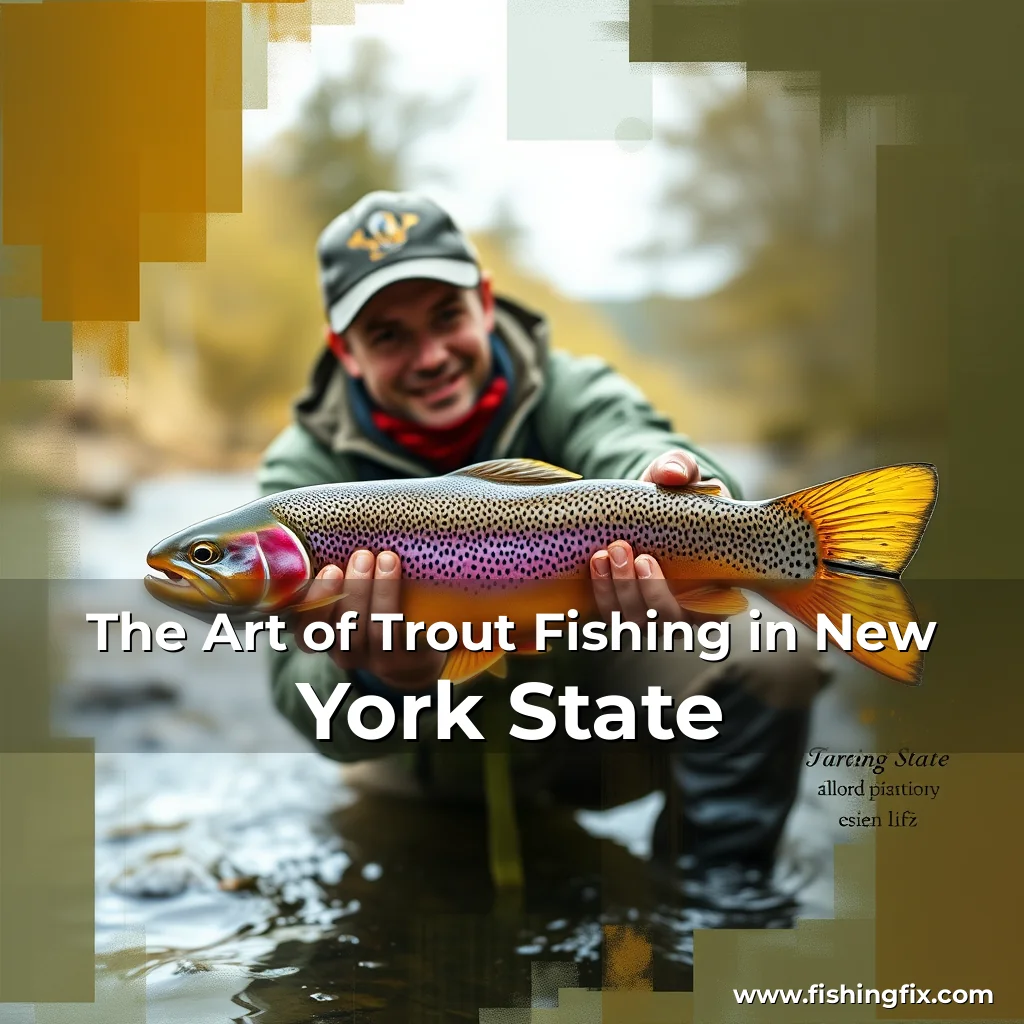
When it comes to trout fishing, New York State is a paradise for anglers. With numerous streams, rivers, and lakes, the state offers a diverse range of trout fishing experiences. However, to increase your chances of catching these elusive fish, it’s essential to understand the techniques and strategies employed by the New York State Department of Environmental Conservation (DEC). In this article, we’ll delve into the world of trout fishing in New York State and provide you with valuable tips and insights to improve your skills.
Fishing in Cold Water
Water temperatures can be cold in the spring due to snowmelt and cold rains. If water temperatures are low, between 35-40°F, trout tend to hold in deeper, slower-moving water. To reach these less active fish, slow drifts and heavy nymphs are effective methods. For example, try using a weighted nymph or a streamer that mimics the natural food sources of trout, such as midges or crayfish. You can also try drifting worms or salted minnows through deep holes to entice trout to feed. To detect whether trout are feeding in the water column, use the “dry-fly/dropper” rig. This involves rigging two flies, one large dry fly, with a sinking nymph tied as a dropper off the bend of the hook of the dry fly. This way, trout have the option to feed on the surface or under the water.
The Benefits of Walking
New York State offers plentiful access to trout streams, including public fishing rights, state lands, and parks. However, it’s essential to note that anglers who are willing to walk further from the parking lot and away from the crowds will often be rewarded with a better fishing experience. The DECinfo Locator and the Tackle Box feature in the HuntFishNY app are free map-based interfaces that can help you find access points throughout the state.
Following Insect Hatches
The spring months are characterized by major insect hatches of mayflies, caddisflies, and stoneflies. These hatches provide an abundance of food for trout, which gorge themselves on these easy meals. By understanding when and where these hatches occur, you can use the right flies to imitate the insects and attract trout. You can search for hatch charts online or call a local fly shop to find out what hatches are likely occurring in your area. Spin fishermen can also benefit from understanding insect hatches. While they may not imitate the insects directly, they can use tiny lures like gulp grubs and trout magnets to capture trout’s attention. When using baitfish imitations, it’s essential to think small, as larger lures may not be effective.
Spin Fishing in Warm Water
Once the water warms up to 50°F, spinners become a great option for covering a lot of water to find active fish. To make the most of this technique, ensure you have a high-quality snap swivel to prevent line twisting. Cast the spinner at a 45° angle downstream, and let it work slowly across the stream on a tight line. Take a few casts in a location and move on, as this allows you to cover a lot of water efficiently.
Weather Awareness
Large spring storms can “blow out” trout streams by increasing the flows and turbidity, making it difficult to fish. To avoid this, it’s crucial to check the US Geological Survey’s flow graphs before heading out. By understanding what flows trout streams fish best at and when it’s too high to fish or too dangerous to wade, you can minimize the risk of a disastrous fishing trip.
Conclusion
In conclusion, trout fishing in New York State requires a deep understanding of the techniques and strategies employed by the DEC. By understanding the habits of trout, the benefits of walking, and the importance of following insect hatches and weather awareness, you can increase your chances of catching these elusive fish. Whether you’re a seasoned angler or a beginner, with the right knowledge and techniques, you can enjoy a rewarding trout fishing experience in the Empire State.