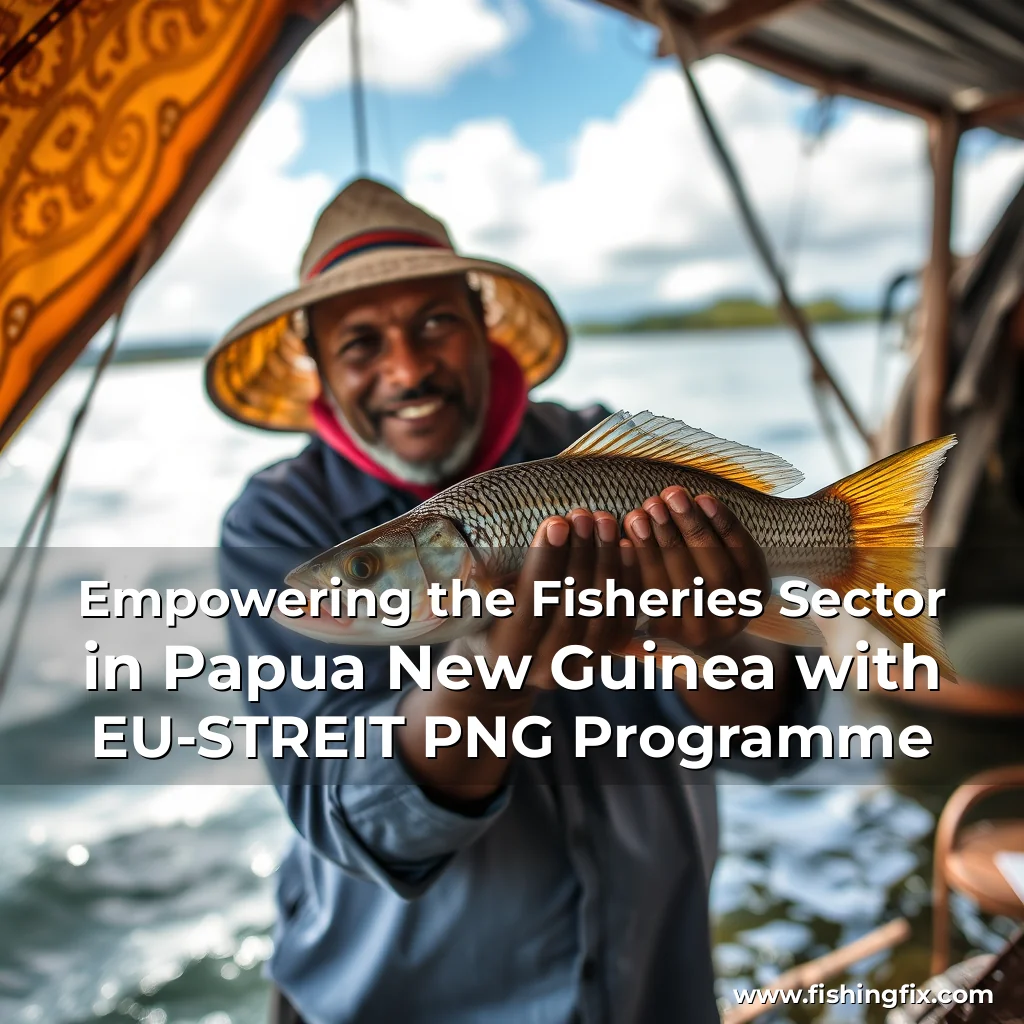
The EU-STREIT PNG Programme, a United Nations Joint Programme implemented by FAO, ILO, ITU, UNCDF, and UNDP, is the European Union’s largest grant-funded initiative in Papua New Guinea. The programme focuses on boosting sustainable and inclusive economic development in rural areas by enhancing economic returns and opportunities in the cocoa, vanilla, and fisheries value chains. ### Benefits for 13,000+ Fishermen and Their Families
• 91 fishing groups across the greater Sepik region were equipped with vital resources, including 50 new engine-mounted craft boats and 200 robust fishing canoes. • The craft boats were distributed to coastal and island groups, while riverine communities received between one and five canoes per group based on their size and membership. • The canoes are designed to be durable, strong, and long-lasting in various water conditions without weakening or breaking. • Essential accessories, including fish baskets, cooler boxes, and solar kits, were provided to riverine groups to enhance their fishing and marketing capabilities. #### Key Highlights of the Programme
| Fishing Group | Benefit |
|---|---|
| Coastal and Island Groups | 1 x 23-foot craft boat with 40 HP outboard engine and fishing and safety gear |
| Riverine Communities | Between 1-5 fishing canoes, depending on group size and membership, along with accessories |
### Empowering Women in the Fisheries Sector
The EU-STREIT PNG Programme recognized the critical yet under-acknowledged roles of women in the fisheries value chain. Among the beneficiaries were 57 mothers from the Kararau Cooperative Society Group and the Kandangapma Women’s Business Group, who received two and three canoes, respectively.
“We get up very early in the morning and paddle out to the lakes to deploy our fishing nets and check the nets late in the afternoon. For some, our husbands have died and cannot help us with dugout canoes. Thank you so much.” – Ms. Ruth Kami, women’s spokesperson from the Kararau Cooperative Society Group
“Through the EU-STREIT PNG Programme, we are able to get this support. The canoes will help our mothers in the village with the supply of protein, fish, and also to provide some income in fish marketing.” – Ms. Tina Savinio, Chairlady of the Kandangapma Women’s Business Group
#### Capacity Building for Sustainable Results
The recipient groups were selected based on criteria agreed upon between the Provincial Fisheries and Marine Resources Offices and the EU-STREIT PNG Programme. These groups received capacity building, including training in improved fishing techniques, and were equipped with facilities for better fish production, processing, and marketing. The Programme also follows a fisheries value chain study commissioned by the Programme and conducted by the PNG National Fisheries Authority (NFA). The study identified challenges faced by key actors in the Sepik region’s fisheries sector and informed upgrading strategies and investment plans. #### Strategic Approach and Partnerships
The EU-STREIT PNG Programme is a United Nations Joint Programme that benefits two provinces: East Sepik and West Sepik. The Programme’s strategic approach is to strengthen and improve the efficiency of value chain enablers, including access to ICT by ITU and digital financial services by UNCDF. ILO supports the development of sustainable, climate-resilient roads and other transport infrastructures, while UNDP provides renewable energy solutions. ### Empowering Rural Communities
The EU-STREIT PNG Programme is committed to empowering rural communities in Papua New Guinea. By enhancing economic returns and opportunities in the cocoa, vanilla, and fisheries value chains, the Programme aims to improve the livelihoods of rural communities and contribute to sustainable development. In conclusion, the EU-STREIT PNG Programme is a significant initiative that has made a positive impact on the fisheries sector in Papua New Guinea. By equipping fishing groups with vital resources and providing capacity building, the Programme has helped to improve the livelihoods of thousands of fishermen and their families. The Programme’s strategic approach and partnerships have also contributed to sustainable development and the empowerment of rural communities.